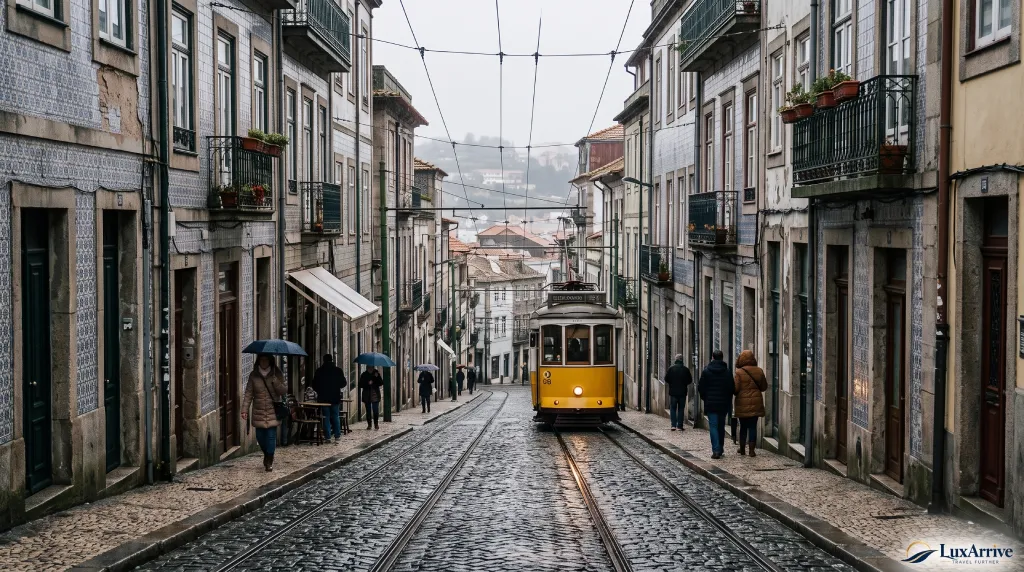
Planning a Porto winter weekend without a car requires a practical approach to the city’s environment. While the historic centre is compact, it is defined by severe inclines, traditional basalt cobblestones, and unpredictable Atlantic weather. Winter travel means fewer crowds outside the festive holiday weeks, but you must also plan for limited daylight—the sun sets around 17:15 in December, extending to about 18:20 by late February.
This two-day itinerary is built for British travellers looking for a relaxed city break. It skips the stress of driving in narrow, unfamiliar streets and relies on a strategic mix of public transport to bypass the most exhausting uphill climbs. By planning routes logically and keeping indoor backup options ready, you can comfortably explore the highlights, even on wet and windy days.
A Quick Look at the 2-Day Itinerary
| Time of Day | Day 1: The Centre and Riverside Descent | Day 2: High Bridges and Vila Nova de Gaia |
|---|---|---|
| Morning | Livraria Lello & Optional Clérigos Tower | Cross Dom Luís I Bridge (Upper Deck) & Cable Car |
| Lunch | Traditional lunch in the Baixa district | Riverside dining in Vila Nova de Gaia |
| Afternoon | Walk downhill to the Ribeira waterfront | Sandeman Port wine cellar tour (or WOW Museums) |
| Evening | Funicular (or bus/taxi) to Batalha & Dinner | Return to central Porto & Dinner |
Note: Times are flexible. Always check specific attraction opening days, as many venues and indoor markets close on Sundays or public holidays.
How Winter and No Car Change Your Porto Strategy
Attempting a Porto winter weekend without a car does not mean you must walk everywhere. The historic centre sits high on a hill, sloping sharply down towards the Douro River. In winter, rain makes the cobblestones incredibly slippery, making both ascents and descents tiring and potentially hazardous.
Without a rental car, your strategy should shift to using transport smartly:
- Rethinking the hills: Use the metro, buses, or the funicular railway to get back up the hills.
- Maximising daylight: Outdoor sightseeing and viewpoints must be prioritised for the morning and early afternoon.
- Booking flexibility: Have indoor alternatives ready. If heavy rain sets in, you will want to shift to an indoor activity rather than forcing a wet walk along the river.
Where to Stay for Easy Access Without a Car
Location is everything when relying on public transport. Do not automatically book a hotel right on the riverfront (Ribeira) just for the view. If you stay at the bottom of the hill, you will either have to climb up into the city centre every morning or rely heavily on buses to start your day.
Look for accommodation in the Baixa or Bolhão districts, ideally within a short walk of the Trindade, Aliados, or São Bento metro stations.
- Trindade is the main public transport hub with a direct airport connection.
- São Bento places you in the historic heart, allowing you to reach morning attractions on relatively level ground before heading downhill later.
Airport Arrival and Navigating Public Transport
Reaching the city centre from the airport without a car is straightforward via Metro Line E (the purple line). The journey to Trindade station takes roughly 30 minutes.
The Andante Ticketing System
To use the public transport network (STCP buses and the Metro), you need to understand the Andante ticketing system.
- The Card and the Airport: Passengers paying for single trips need an individual Andante Azul card (€0.60). The airport journey requires a Z4 ticket fare, which costs €2.30 for a single trip. Z4 is a fare class based on the number of zones crossed, not a single geographic zone.
- Daily Passes vs. Singles: For a weekend where you might take buses to avoid the rain, the Andante Tour 1 pass is often simpler. It has its own dedicated paper card, costs €7.75, and offers unlimited travel on the core network for 24 consecutive hours after first validation.
- Exclusions: Standard Andante tickets and the Andante Tour pass do not cover the Funicular dos Guindais or the Gaia Cable Car, which require separate tickets.
- Validation: You must tap your card on the yellow machines before boarding every metro train or bus.
Day 1: City Centre Highlights and the Riverside Descent
Group your central activities logically to avoid walking back and forth across the same districts in the cold.
Morning: Livraria Lello and Clérigos
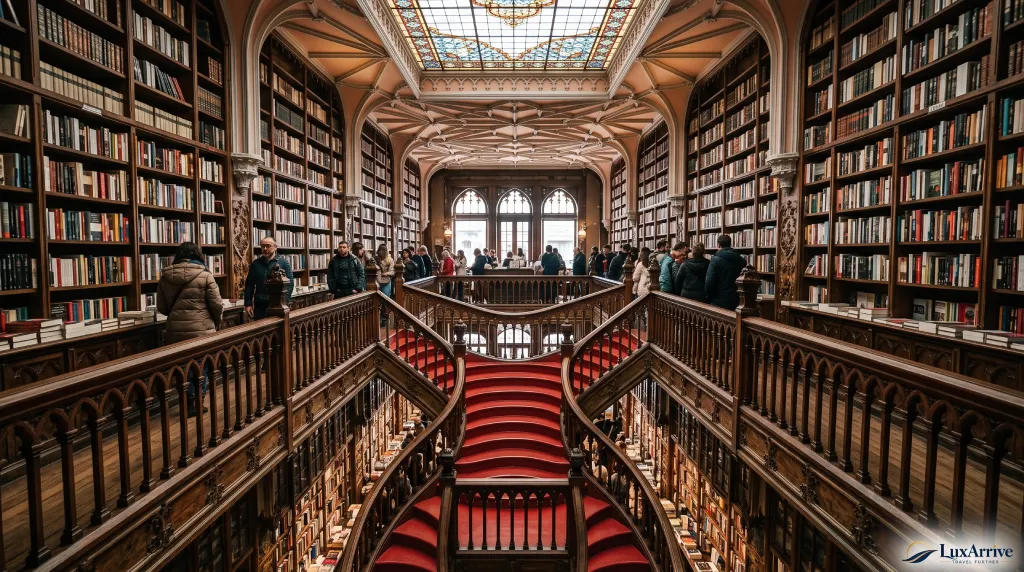
Start your day at the famous Livraria Lello. You must buy tickets online in advance. The standard “Ticket-Voucher” is €15.95, which is deductible from the purchase of Livraria Lello Editions books inside. Ensure you book a specific time slot, though be prepared for a queue outside regardless of your booking time.
Nearby is the Clérigos Tower (Torre dos Clérigos). A standard ticket for the tower and museum costs €10.00. Be aware that the climb involves 240 steps up a narrow spiral staircase. If you prefer to avoid the physical exertion, skip the tower climb and simply visit the adjoining church at ground level.
Lunch: Traditional Fare in Baixa
Stay in the upper Baixa district for lunch to try a Francesinha—Porto’s famously heavy sandwich made with bread, cured meats, and steak, covered in melted cheese and hot tomato sauce. It is ideal winter comfort food.
Afternoon: The Downhill Walk to Ribeira
After lunch, visit the São Bento Railway Station to view the magnificent azulejo tile panels inside the main hall (free to enter and fully covered).
From here, navigate down towards the Ribeira district. While walking downhill requires less cardiovascular work, wet cobblestones still demand careful footing. Spend the afternoon taking in the views of the Douro River and the traditional Rabelo boats.
Evening: Funicular Ascent and Dinner
Once you finish at the waterfront, avoid walking back up the steep hill. Instead, check if the Funicular dos Guindais is running. This short railway connects the lower Ribeira directly to the upper Batalha neighbourhood (a single adult trip costs €4.00). Note: The funicular frequently undergoes maintenance. If it is closed, use a local bus or hail a short taxi ride back to the upper city. From Batalha, you are well-positioned to find a warm restaurant for dinner.
Day 2: The High Bridge, Gaia, and Port Wine
Your second day involves crossing the river to Vila Nova de Gaia, the city on the south bank where the Port wine cellars are located.
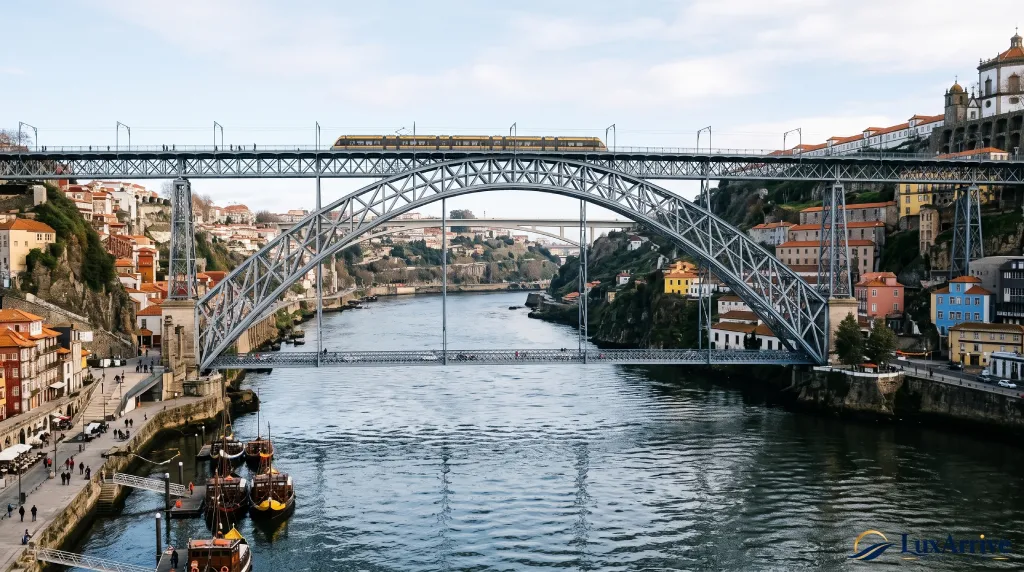
Morning: Crossing the Dom Luís I Bridge
To save your legs, walk onto the upper deck of the Dom Luís I Bridge directly from the upper part of Porto (near the Cathedral). The upper deck is reserved for pedestrians and the Metro.
Once you reach the Gaia side, you are high above the riverfront. Take the Teleférico de Gaia (cable car) down to the waterfront. A single adult ticket costs €7.00.
Lunch: Riverside Dining in Gaia
The Gaia waterfront is lined with restaurants offering excellent views looking back over Porto. Finding a table for a relaxed lunch is generally easier here in the winter than during peak summer.
Afternoon: Sandeman Port Cellar
Winter afternoons are perfect for touring the Port wine cellars. We suggest the Porto Sandeman Visit at the Sandeman cellars, conveniently located right on the Gaia riverfront. The standard tour lasts roughly 50 minutes, includes a tasting of three Port wines, and costs €23.00. Advance booking is highly recommended.
Non-Alcoholic Alternative: If you do not drink alcohol, consider The Chocolate Story at the WOW Porto cultural district as an indoor alternative to the Sandeman visit. Plan for an uphill walk from the Gaia waterfront, or use a taxi at an additional cost if you prefer to avoid the climb. The museum requires a separate ticket; check its current admission price and opening hours before visiting. If you choose this alternative, replace the Sandeman admission cost in the sample budget with the price of your chosen ticket.
Evening: Returning to the Centre
To return to Porto, you can walk across the lower deck of the Dom Luís I Bridge from the Gaia waterfront. This deposits you back in the Ribeira district, where you can catch a bus or a taxi back up to the city centre for dinner.
Practical Wet and Windy Weather Backups
If persistent rain or high Atlantic winds set in, you will need to modify your plans:
- Wind Alternatives for the Bridge and Cable Car: The upper deck of the bridge is highly exposed. If the wind is too strong, take the Metro (Yellow Line) across the river instead. If the Gaia Cable Car ceases operation due to high winds, do not force a long walk down; check the official public transport journey planner for a suitable bus route from your location, or take a taxi down to the Gaia waterfront at an additional cost.
- Mercado do Bolhão: Porto’s historic Mercado do Bolhão is a great rainy-day option for browsing fresh produce. However, it is only semi-covered (open to the air in the centre), so wrap up warm. Crucially, it is closed on Sundays and public holidays.
- Palácio da Bolsa (Sunday Alternative): If it rains heavily on a Sunday, swap your afternoon riverside walk for a tour of the Palácio da Bolsa (Stock Exchange Palace). The standard ticket is €14.00. Access is exclusively via a mandatory guided tour, so you must check available time slots and languages upon arrival or online.
Weekend Budget Breakdown (Per Person)
This sample budget estimates the essential on-the-ground costs for an individual traveller over two full days. It excludes hotel, flights from the UK, and optional souvenirs.
Public Transport (Airport & City): €12.95. (Calculated as: €5.20 for two Z4 single tickets and a reusable Azul card for the airport runs, plus €7.75 for one Andante Tour 1 pass, activated to cover all metro and bus travel during your busiest 24-hour sightseeing window). Any additional local journeys outside that 24-hour window must be paid for separately; the two airport journeys are already included in this calculation.
Funicular & Cable Car: €11.00. (One single trip on the Funicular dos Guindais for €4.00, plus one single trip down on the Gaia Cable Car for €7.00. If the funicular is closed, a taxi is an additional expense; do not assume that the €4.00 allowance will cover the fare).
Attractions: €38.95. (Livraria Lello Ticket-Voucher at €15.95, and the Porto Sandeman Visit at €23.00).
Food and Drink: €100.00. (An editorial estimate covering two days: roughly €15 for breakfasts/coffees, €35 for casual lunches, and €50 for mid-range dinners).
Estimated Total: €162.90 per person. This total applies to the sample itinerary and assumptions above. It does not include taxis, additional local journeys outside the pass validity, luggage storage, the optional Clérigos Tower visit, or alternative attractions such as WOW museums and Palácio da Bolsa. Adjust the total if you add an activity or replace one of the included visits.
Packing and Preparation Tips
- Footwear is critical: Leave flat-soled trainers at home in favour of walking boots with deep, rubberised grips for the wet cobblestones.
- Luggage storage: If you arrive before check-in, you can use automated luggage lockers, such as those operated by City Lockers at Trindade station, to secure your bags while you explore.
- Layering: Average winter highs hover around 13°C to 14°C, dropping to 6°C at night. A high-quality windproof and waterproof outer layer is highly recommended, as large umbrellas can be impractical and difficult to manage in strong Atlantic gusts.
More European City Breaks
If you are looking at other European breaks that do not require driving, you might find our Paris weekend itinerary without museums useful for planning a relaxed pace. Alternatively, if you prefer train travel over flying, read our guide on how to practically structure your Paris first day itinerary after Eurostar arrival.