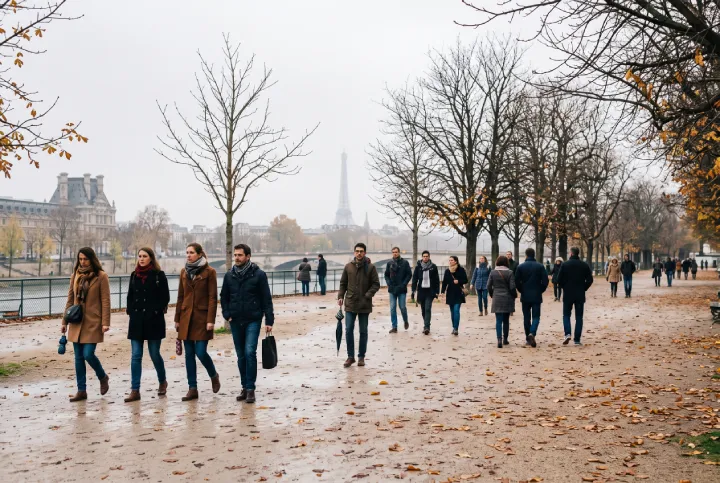
Paris is world-renowned for its art and history, but you do not need to spend hours inside the Louvre or navigate the crowds at the Musée d’Orsay to experience the magic of the French capital. If your idea of a perfect getaway involves strolling down grand boulevards, watching the world go by from a pavement café, and admiring striking architecture under the open sky, a Paris weekend itinerary without museums is entirely achievable.
This guide is designed for UK travellers who want to soak up the city’s atmosphere at a relaxed pace. It assumes you have two full days in the city. If you are still working out the logistics of your inbound journey via the Eurostar and settling into your hotel, you can coordinate this guide with our Paris first day itinerary, which covers arrival logistics and your first evening.
For broader travel inspiration and neighbourhood breakdowns, you can also browse our comprehensive Paris destination guide.
The 2-Day Overview
| Day | Focus Area | Key Locations | Terrain & Pace |
| Day 1 | Historic Paris & The Left Bank | Île de la Cité, Latin Quarter, Jardin du Luxembourg, Saint-Germain-des-Prés | Mostly flat, with a gentle uphill walk towards the Panthéon. |
| Day 2 | Montmartre, the Arc de Triomphe and Trocadéro | Montmartre, Arc de Triomphe, Champs-Élysées, Trocadéro | Includes steep streets and stairs in Montmartre; flat along the avenues. |
Note: Even without museums, a “relaxed” day in Paris still involves substantial walking. Wear comfortable trainers.
Day 1: Historic Paris and the Left Bank
Your first full day focuses on the historic heart of the city and the charming, intellectual atmosphere of the Left Bank (Rive Gauche).
Morning: Île de la Cité and the Latin Quarter
Start your day at the geographic and historical centre of Paris: the Île de la Cité.
- Notre-Dame Cathedral (Exterior): Emerge from the Cité metro station and walk towards the cathedral. Although Notre-Dame successfully reopened its doors in December 2024, admiring the magnificent French Gothic façade and flying buttresses from the Parvis (the public square) is an excellent way to appreciate its scale without having to secure digital reservations or navigate the indoor visitor queues.
- Cross to the Latin Quarter: Walk south across the Pont au Double or Petit Pont to enter the 5th arrondissement. This area is a maze of narrow, medieval streets.
- Coffee Stop: Pick up a coffee and a freshly baked croissant at a local boulangerie on Rue Saint-Jacques.
- The Panthéon (Exterior): Walk up the gentle slope of the Montagne Sainte-Geneviève to view the imposing neoclassical façade of the Panthéon. The surrounding plaza offers a lovely perspective of the dome without requiring a ticket.
Lunch and Afternoon: Jardin du Luxembourg to Saint-Germain
- Sunday Market Alternative: If your Day 1 falls on a Sunday, you can easily detour to Boulevard Raspail just south of the neighbourhood before lunch. The famous Marché Raspail transforms into an all-organic food market on Sunday mornings, perfect for picking up fresh produce and soaking in the local weekend atmosphere.
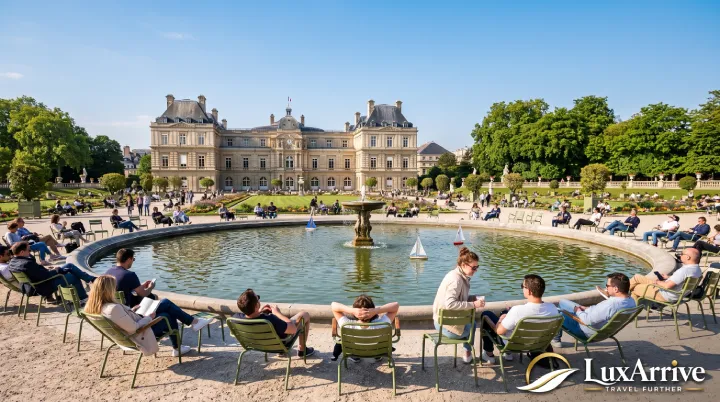
- Jardin du Luxembourg: A short five-minute walk from the Panthéon brings you to one of the most beautiful public parks in Europe. Commissioned by Marie de’ Medici in 1612, these gardens are free to enter. Spend an hour walking along the tree-lined promenades and relaxing by the Medici Fountain. Note: Opening and closing times vary throughout the year. Check the official garden timetable before visiting.
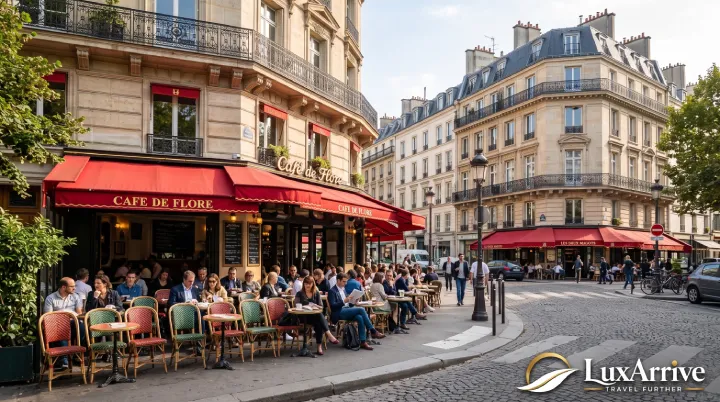
- Lunch in Saint-Germain-des-Prés: Leave the gardens via the northern exits and wander into the 6th arrondissement. Avoid the heavily tourist-focused eateries right on Boulevard Saint-Germain. Instead, head down Rue de Buci or Rue Mazarine to find a classic brasserie for a simple croque monsieur or seasonal salad.
- Afternoon Stroll: Spend your afternoon exploring the boutique shops and narrow streets of this chic neighbourhood, admiring the architecture of the Abbey of Saint-Germain-des-Prés from the outside.
Evening: The Seine and Saint-Michel
- Seine Riverbank Walk: As evening approaches, walk north back towards the river. Strolling along the banks of the Seine as the streetlamps turn on is a quintessential Parisian experience.
- Dinner: The wider area around Saint-Michel offers numerous dining options. For a traditional French dining experience with beautiful interiors, look for a classic bouillon near Odéon, which serves hearty French staples in grand dining rooms.
Day 2: Montmartre, the Arc de Triomphe and Trocadéro
Day two introduces a bit more elevation and covers some of the most iconic sights in Paris, focusing entirely on outdoor architecture and grand perspectives.
Morning: The Heights of Montmartre
Start your morning in the 18th arrondissement. Montmartre sits on a large hill, so be prepared for steep streets and stairs.
- Sacré-Cœur Basilica: Take the metro to Anvers (Line 2). To save your legs, use a separate Metro ticket to ride the Funiculaire de Montmartre up the hill (note that a single ticket does not allow a free transfer between the underground metro and the funicular). The sweeping views over Paris from the steps of the white-domed Sacré-Cœur are spectacular.
- Wander the Cobblestones: Spend an hour walking through Place du Tertre (the artists’ square) and down the quieter backstreets, such as Rue de l’Abreuvoir, past the famous Maison Rose.
Lunch and Afternoon: Arc de Triomphe and the Avenues
- Transit: Walk down the hill to Pigalle or Blanche and take the metro (Line 2) directly to Charles de Gaulle – Étoile.
- Arc de Triomphe: Emerge from the station to see the massive monument anchoring the top of the Champs-Élysées. You can use the pedestrian underpass to access the base of the arch for free to see the Tomb of the Unknown Soldier and the eternal flame, entirely skipping the ticketed climb to the roof.
- Lunch near the Avenues: For lunch, avoid the commercialised stretch of the Champs-Élysées. Walk a few streets north towards Avenue des Ternes or south around the George V metro station for better-quality brasseries.
- Avenue Walk: Enjoy a mostly flat, elegant walk down Avenue Kléber. This broad, tree-lined avenue takes you straight from the Arc de Triomphe towards the river, passing striking Haussmannian architecture.
Evening: Trocadéro and the Eiffel Tower Sparkle
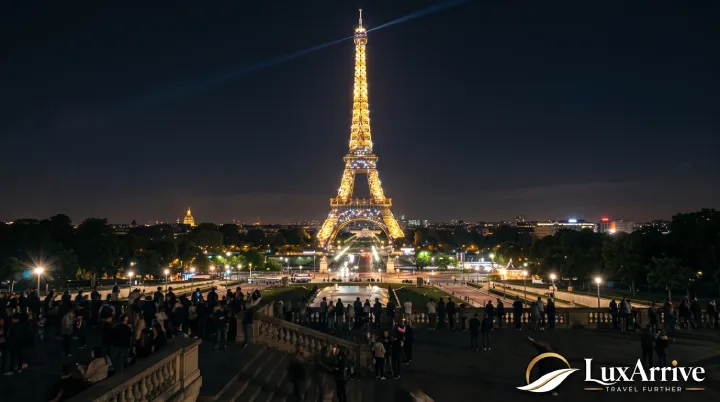
- Trocadéro: Avenue Kléber leads you directly into Place du Trocadéro. The Esplanade provides the ultimate, unobstructed view of the Eiffel Tower across the river.
- The Sparkle: Every hour on the hour after sunset, the Eiffel Tower sparkles for five minutes. It is a completely free spectacle. Note: The final sparkle usually takes place at midnight, or 1:00 AM during the high summer season.
- Dinner: Stay in the 16th arrondissement for a celebratory final dinner, or cross the river to the 7th arrondissement. Book a table at a local bistro a day in advance to secure a good spot.
Practical Adjustments
Coping with Rain
If the weather turns poor, you do not have to resort to a museum. Paris is famous for its Passages Couverts (covered shopping arcades) built in the 18th and 19th centuries. Head to the 2nd arrondissement to walk through the beautifully glazed Galerie Vivienne or Passage des Panoramas. They are free to enter, architecturally stunning, and packed with dry, cosy cafés. You can check the locations of these arcades on the official Paris je t’aime website. Note that some passages close on Sundays and public holidays.
Winter and Short Daylight Hours
During winter, daylight hours are shorter. Use the daylight hours for your park walks, as gardens like Luxembourg close much earlier in the colder months. The advantage of winter is that you can catch the Eiffel Tower’s evening sparkle much earlier before heading to dinner.
Realistic Weekend Budget
This budget outlines the estimated essential costs for one adult enjoying this two-day itinerary. It assumes you already possess a physical transport card (like the Navigo Easy pass) or use your smartphone to purchase digital tickets, and it does not include your hotel, Eurostar tickets, or travel from the UK.
Paris uses a simplified flat-fare ticketing system. The 2026 official prices are outlined below.
| Expense Category | Details | Estimated Cost (EUR) |
| Transport | 8x single Metro/Train/RER tickets (€2.55 each). (Note: Bus/Tram tickets are priced separately at €2.05 each). This is an estimated assumption; your actual need will vary depending on your hotel’s location and specific trips. | €20.40 |
| Breakfasts | Coffee and a pastry from a local bakery (2 days). | €15.00 |
| Lunches | Two casual sit-down meals at a brasserie or café (e.g., main dish + drink). | €45.00 |
| Dinners | Two mid-range restaurant meals (e.g., two courses + a glass of wine). | €80.00 |
| Activities | Parks, monument exteriors, and walking. | €0.00 |
| Optional Extra | 1-hour Seine river cruise. Tickets are €20 in person or €17 when booked online via the official Bateaux-Mouches website. | €17.00 – €20.00 |
| Total Estimate | Excluding optional extras. | €160.40 |
Prices are indicative estimates for the current period and can vary based on exact dining choices. Official transport fares can be verified via the Île-de-France Mobilités website.
Frequently Asked Questions
Do I need to book restaurants in advance for a weekend in Paris?
For popular bistros and well-reviewed mid-range restaurants, yes. Parisians dine out frequently on weekends. While you can usually find a casual brasserie or café for lunch without a reservation, booking dinner a few days to a week in advance is highly recommended.
Is Paris easy to walk around for two full days?
Central Paris is relatively compact, but a “relaxed” day still involves a lot of walking. Areas like the Latin Quarter involve gentle slopes, while Montmartre (Day 2) features steep inclines and steps.
Where can I find public toilets while walking?
Paris has grey, self-cleaning public toilets (sanisettes) scattered across the city, which are free to use. Alternatively, if you stop for a coffee or a drink at a café, you can usually use their facilities; just ask the staff. Train station toilets usually charge a small fee.
If you are planning further travels or want more specific area guides, be sure to check our full collection of travel guides to help structure your next European getaway.