
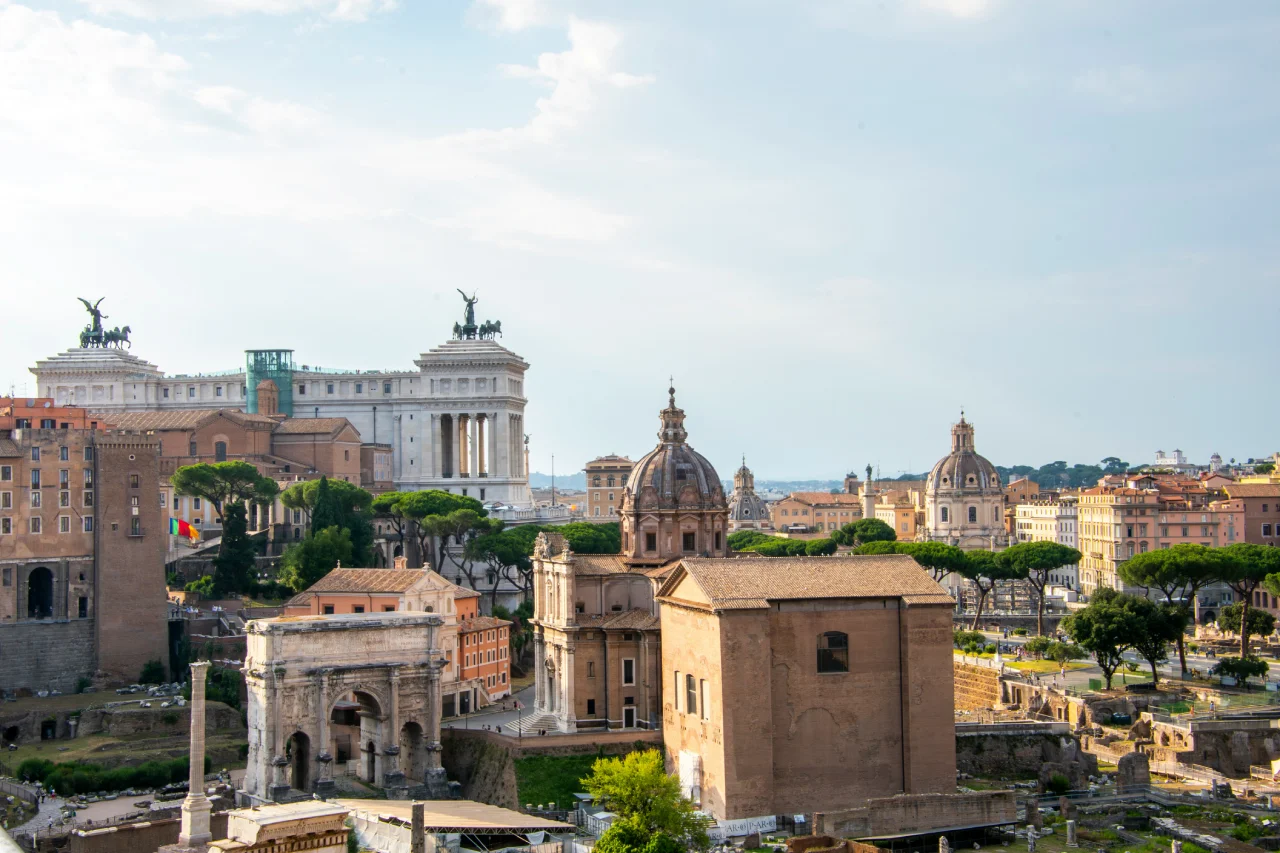
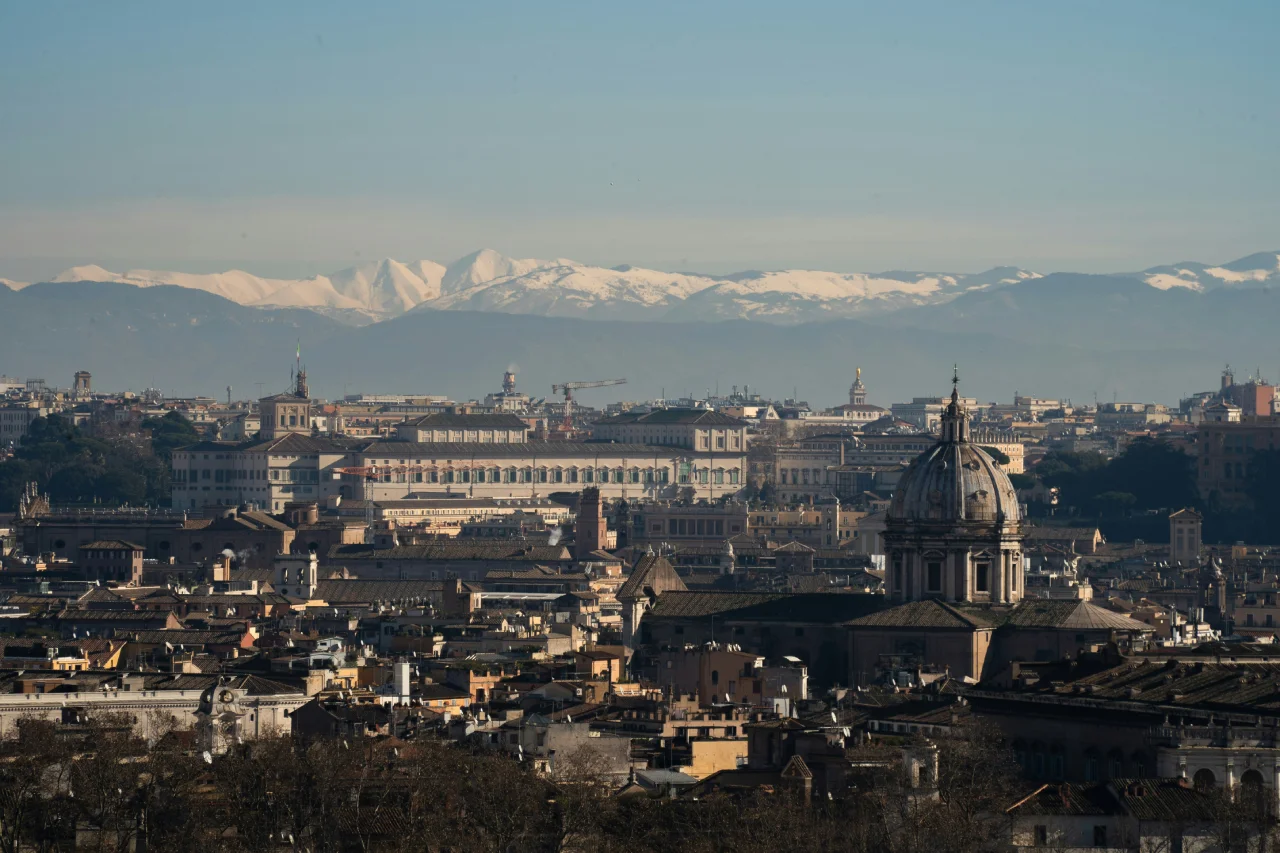
Rome reveals its history at street level. Ancient columns stand beside busy roads, church façades overlook neighbourhood squares, and a walk between landmarks can lead past courtyards, bakeries and small shops. Italy’s capital rewards curiosity as much as a carefully planned itinerary.
For a first visit, balance a few major attractions with time to explore on foot. Reserve ahead where required, group nearby sights together and leave room for breaks. Distances, uneven paving and summer heat can make an ambitious schedule more tiring than it looks on a map.
What Makes Rome Worth Visiting?
Rome’s appeal lies in the way different periods share the same urban space. The Colosseum, Roman Forum and Palatine Hill bring the ancient city into focus, while the Pantheon offers a different encounter with Roman architecture: a vast domed interior illuminated through its central opening, the oculus.
Elsewhere, the experience shifts towards streets and squares. Piazza Navona, the Trevi Fountain and the lanes around Campo de’ Fiori can form part of a central walking route, with stops chosen according to your interests rather than a fixed checklist.
Vatican City, an independent state surrounded by Rome, adds another dimension. The Vatican Museums and Sistine Chapel are a substantial visit in their own right. St Peter’s Basilica has separate access arrangements, so allow time to plan the two visits individually.
Beyond the landmark routes, Monti, Trastevere and Testaccio offer different settings for dining and neighbourhood walks. If you have additional days, consider an excursion such as Ostia Antica or Tivoli, checking the complete journey and visiting arrangements before setting out.
Top Places and Experiences
The Colosseum, Roman Forum and Palatine Hill
The Colosseum’s surviving structure gives a sense of the scale of ancient Roman public entertainment. Nearby, the Roman Forum and Palatine Hill offer a broader view of the ancient city through archaeological remains, open spaces and elevated viewpoints.
For regular admission, entry to the Colosseum requires a reserved time slot. Ticket options differ in the areas they include, so check whether your chosen visit covers the arena, underground areas or other restricted spaces. Use the official archaeological park website to compare access arrangements.
Special admission days can follow different procedures. Check their specific rules rather than assuming ordinary reservations apply. Allow several hours for the wider archaeological area, with breaks and suitable footwear for exposed paths and uneven surfaces.
Vatican Museums and St Peter’s Basilica
The Vatican Museums bring together classical sculpture, painting, tapestries and richly decorated galleries, with the Sistine Chapel among the main highlights. Choose a manageable route and allow time for the collections along the way.
Advance booking is strongly recommended. Use the official Vatican Museums information and ticketing links to check current arrangements and select the correct visit.
Plan the museums and St Peter’s Basilica as separate visits. Check the access arrangements included in your booking rather than assuming your museum ticket provides direct entry to the basilica.
The basilica and its dome also have different visiting arrangements. Review the official St Peter’s Basilica website for access, security procedures and any additional requirements. Leave time between bookings rather than scheduling them back to back.
The Pantheon
The Pantheon combines an ancient Roman structure with its continuing role as a church. Its portico, domed interior and central oculus make it one of Rome’s most distinctive architectural experiences.
General sightseeing admission requires a ticket, with exemptions and special arrangements applying to some visitors and occasions. Check the current listing through the official Musei Italiani platform before visiting.
Allow time to appreciate the interior rather than treating it only as a photograph stop. Afterwards, explore Piazza della Rotonda and nearby streets, or continue towards Piazza Navona as part of a wider walk.
Trevi Fountain
The Trevi Fountain’s sculptural façade fills one side of a compact square, creating a dramatic contrast with the streets leading towards it. It is a popular stop, so expect crowds and give yourself time to move through the area without rushing.
Access to the inner perimeter near the basin follows a ticketing system, with exemptions for eligible visitors. The fountain can also be viewed from the surrounding piazza without entering this controlled area.
Check the official Trevi Fountain website for current access arrangements. Follow signs and staff instructions, and avoid blocking pathways while taking photographs.
Monti and the Basilica of San Clemente
Monti’s streets offer a useful contrast to the scale of nearby ancient monuments. Spend time around its smaller squares, independent shops and restaurants, allowing for slopes and uneven paving along your route.
Near the Colosseum, the Basilica of San Clemente provides a particularly clear example of Rome’s historical layers. The present medieval basilica stands above an earlier church and Roman-era structures, including a Mithraic sanctuary.
Visiting the lower archaeological levels is a separate part of the experience. Consult the official San Clemente website for booking information and access conditions before adding it to your day.
Trastevere
Across the Tiber, Trastevere offers narrow streets, small piazzas and an active dining scene. It works well as a neighbourhood outing, with time to wander rather than move directly between major attractions.
The busiest lanes can become lively in the evening. Explore side streets as well as the main squares, and choose your route according to whether you want dining, architecture or a quieter walk.
From parts of the historic centre, bridges such as Ponte Sisto provide a natural approach on foot. For longer journeys, check current bus and tram connections rather than relying on the Métro, which does not directly serve the neighbourhood.
Getting There and Getting Around
Rome’s main airports are Leonardo da Vinci–Fiumicino (FCO) and Ciampino (CIA). Check your airport code before planning the transfer, as their connections differ.
Fiumicino has the Leonardo Express service to Roma Termini, regional rail connections and coach services. The most convenient choice depends on your accommodation and any changes required after arriving in the city.
Ciampino has coach connections and local bus links to the wider transport network. Consult Aeroporti di Roma for the official airport transport options, and compare the complete journey to your destination.
Within Rome, ATAC’s network includes Métro lines A, B/B1 and C, buses and trams. The Métro is useful for some major sights and longer journeys, but several historic-centre destinations are better approached on foot or by surface transport.
Tickets are available from station machines, authorised retailers and supported mobile ticketing apps. Contactless payment is available through ATAC’s Tap & Go system across the Métro and surface network. Check the official ATAC guidance for supported payment methods and validation instructions.
Combine transport with manageable walking routes. Check service changes and accessibility before travelling, particularly if stairs, cobblestones or longer distances could affect your plans.
Where to Stay
Centro Storico
The streets around the Pantheon, Piazza Navona and Campo de’ Fiori suit travellers who want to spend much of their visit exploring the historic centre on foot. Restaurants, churches and small squares provide plenty of reasons to pause between landmarks.
Check the exact address before booking. Busy pedestrian streets can remain lively late into the evening, and older buildings may have stairs or limited lift access. Compare the route to transport stops as well as proximity to attractions.
Monti
Monti can suit visitors who want to combine ancient Rome with neighbourhood dining and smaller streets. Depending on the location, Cavour or Colosseo stations may be useful for journeys beyond the area.
Some streets are hilly, so inspect the walking route to your accommodation rather than relying only on the distance shown on a map. Check recent reviews for noise if your room faces a popular evening gathering place.
Trastevere
Trastevere appeals to travellers who enjoy an active evening atmosphere and spending time around local streets and restaurants. It can be a rewarding base when neighbourhood character matters as much as proximity to individual monuments.
The area has no direct Métro station, making current bus, tram and walking connections important when comparing accommodation. Quieter side streets may offer a different experience from rooms overlooking the busiest dining lanes.
Prati
Prati can be convenient for visits to the Vatican Museums and St Peter’s Basilica. Its broader streets and access to Line A stations such as Ottaviano and Lepanto offer a different setting from the narrow lanes of the historic centre.
Check the distance to the entrance you actually need, as the Vatican Museums and St Peter’s Basilica have separate approaches. For sightseeing elsewhere, compare transport connections and allow time to reach ancient Rome.
Practical Tips for Your Visit
- Plan bookings before filling the rest of your day. Reserve attractions that require a time slot, then arrange nearby walks and flexible stops around them.
- Check exactly what each ticket includes. Different areas of archaeological sites, museums and religious buildings may have separate access arrangements.
- Use official visitor information. Confirm entrances, identification requirements, closures and booking conditions through the attraction’s own website.
- Follow transport validation instructions. The correct procedure depends on whether you use a paper ticket, mobile ticket or contactless payment.
- Prepare for uneven streets and exposed sites. Wear supportive shoes, carry water and plan breaks during hot weather.
- Check church dress requirements. Carry a light layer to cover shoulders or knees where required, and respect services and restricted areas.